DISCLAIMER: I am not affiliated with JetBrains in any way.
This article is not a feature-by-feature comparison to declare a winner. In my experience, Sublime Text and TextMate are elegant, lightweight tools perfect for hacking on small projects or quick edits. However, I want to share my specific experience regarding productivity at scale.
Frustrations
I usually work across multiple projects and programming languages. At one point, I was juggling 78 git repositories, including private repos and pet projects. The stack included Ruby, Java, Node.js, Javascript, HTML, Golang, SASS, Phonegap, and even some PHP. Each required a different toolchain for building, testing, or watching files.
With dynamic languages like Ruby or Node.js, especially in a large codebase with multiple contributors, staying on top of changes and navigating class references is mentally draining without strong IDE support.
Furthermore, simple text editors struggle with Java. Integrating compiled languages with dynamic ones meant I had to memorize two sets of shortcuts and workflows.
The context switching between editors, shortcuts, toolchains, and conventions became a significant overhead. I started looking for a solution to unify my workflow and reclaim my productivity.
Criteria
I defined a list of requirements that eventually led me to IntelliJ:
- Good Java and Maven support
- Robust plugin ecosystem for multiple language syntax highlighting
- Refactoring capabilities for dynamic languages
- Customizable build tools and watchers
- Built-in terminal/console
- Sensible keyboard shortcuts
- Spell checker (essential for me)
Plugins for Ruby, Node.js, Golang and more
Some plugins are only available in the paid Ultimate edition (comparison). I tried these during the 30-day trial, and they worked flawlessly.
Ruby
The Ruby plugin (paid version) is incredible. Reference lookups and refactoring tools are indispensable when diving into a large codebase or exploring external libraries. It comes not just with snippets, but full build cycle and test integration:
- Rails integration with Rake task support
- Breakpoints and visual debuggers
- Instant inline documentation lookup
Check out the detailed video demo and feature list.
Node.js
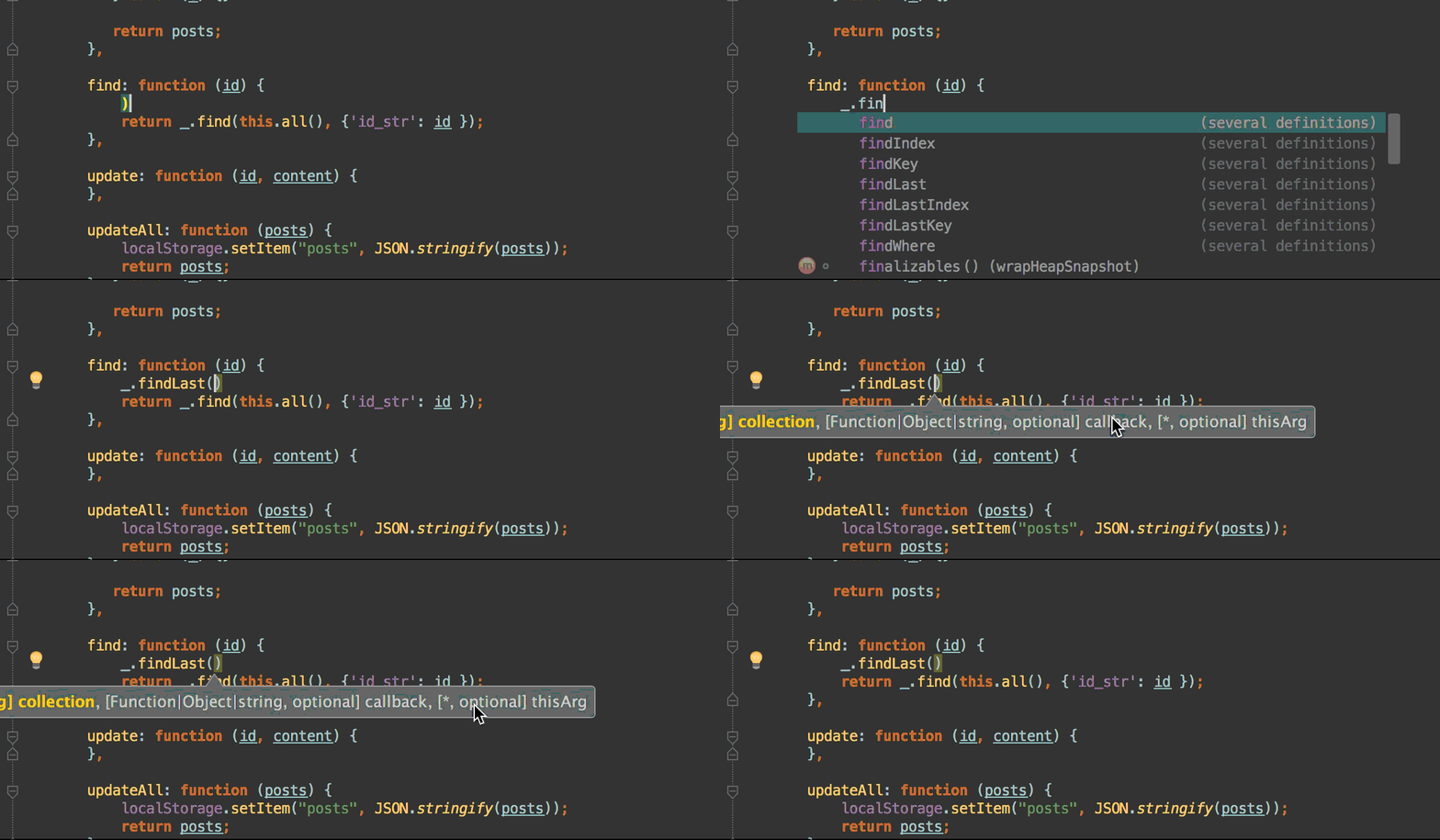
The Node.js plugin is available in the Community Edition. It offers autocomplete and parameter suggestions that are surprisingly helpful. Instead of relying on memory for every method signature, the IDE handles the details, making typing significantly faster.
Golang
At the time of writing, this is the trickiest environment to set up. IntelliJ didn’t have official Go support yet, but the open-source plugin provided basic compilation and completion. Once you configure your GOPATH, GOROOT, and SDK correctly, it makes cracking on with Go much easier.

Phonegap
Although IntelliJ isn’t explicitly designed for Phonegap, I can leverage file watchers and the SASS extension to automate SCSS and JavaScript builds, while using Ant to handle iOS and Android compilation. For native Android apps, there is also the official Android Studio (based on IntelliJ).
Below is my custom iOS Phonegap build task configuration.

SASS and LESS
I use SASS and LESS across multiple projects. The file watcher automatically compiles these changes (supporting Compass as well). It even pipes build errors directly to the log window.
After opening a project, I don’t want to launch a separate console just to run a watch command. While manageable for a single project, complex setups benefit from automation. Removing that manual step clears the noise and lets me focus on the code.

Built-in Terminals
IntelliJ supports multiple terminal instances per project with custom layouts. When launching a terminal, it automatically starts in the project root. This allows me to ditch external terminal windows and keep my console context bound to the project.

Built-in TODO list
While Sublime Text supports this via extensions, IntelliJ bundles it out of the box. I can easily filter tasks, for example, viewing only the TODOs I created.

Final thoughts
This merely scratches the surface of the features I love. I am extremely happy with how IntelliJ helps me focus on the actual work effectively across multiple environments.
This doesn’t mean it is the right tool for everyone. However, I strongly recommend evaluating your daily workflow to identify friction points. Sometimes a full IDE is the answer; other times, a few bundles in Sublime Text are all you need.
Ironically, I am writing this Markdown post in Sublime Text. Use the right tool for the job.
* Ultimate version usually offers a discount during the year, if you are looking for buying it, keep an eye on those offers.
Leave a comment